


Allow me to introduce you to:


Thread Starter
Junior Member
Posts like a Ricer Type-R
Joined: Aug 2002
Posts: 11
Likes: 13


Hold the presses. I broke it today.
Not sure if it was grade 2 or grade 5. Snapped in half (tension, not shear) leaving the parky lot for lunch a little while ago.
It snapped in half inside the rubber block, sounded like a rifle shot hitting the front of the trans. It was the INSIDE half that broke off and came out. The lower half including bushing are still stuck in the rubber.
I think it may be time to increase the allthread grade and possibly the diameter also.
Grade 2 is 74,000psi tensile strength.
Grade 5 is 120,000psi tensile strength.
Grade 8 is 150,000psi tensile strength.
Bare minimum, under hard accelleration, It took 37 TONS per square inch to snap it. Possibly up to 60 tons depending on grade. Time to go shopping again.
Not sure if it was grade 2 or grade 5. Snapped in half (tension, not shear) leaving the parky lot for lunch a little while ago.
It snapped in half inside the rubber block, sounded like a rifle shot hitting the front of the trans. It was the INSIDE half that broke off and came out. The lower half including bushing are still stuck in the rubber.
I think it may be time to increase the allthread grade and possibly the diameter also.
Grade 2 is 74,000psi tensile strength.
Grade 5 is 120,000psi tensile strength.
Grade 8 is 150,000psi tensile strength.
Bare minimum, under hard accelleration, It took 37 TONS per square inch to snap it. Possibly up to 60 tons depending on grade. Time to go shopping again.

 at least it didnt fly off and ruin something
Thread Starter
Junior Member
Posts like a Ricer Type-R
Joined: Aug 2002
Posts: 11
Likes: 13
It would have been worse if the other end had broken and shout out. Trans cooler lines are directly in the path. Just imagine how much energy it had coming out. And the velocity it would have been travelling at.
I'll be cross-drilling and safety-wiring the next version. Tethers if it makes more sense.
Edit: Found the nylock on top is mashed. Going to look at the car. Pics soon. Everyone in the car FELT the broken piece hit the trans. Not feeling the mount flex, but the actual shot from the broken piece.
Edit again:
Went out and found the washer. 316 Stainless. Just like the threaded rod. Stronger than Grade 5 by a small margin. Upgrade that to 120,000psi or 60 tons per square inch. This being 3/8 or .375, it'* taken somewhere around 20 tons of force to rip it apart in tension.
I'll be cross-drilling and safety-wiring the next version. Tethers if it makes more sense.
Edit: Found the nylock on top is mashed. Going to look at the car. Pics soon. Everyone in the car FELT the broken piece hit the trans. Not feeling the mount flex, but the actual shot from the broken piece.
Edit again:
Went out and found the washer. 316 Stainless. Just like the threaded rod. Stronger than Grade 5 by a small margin. Upgrade that to 120,000psi or 60 tons per square inch. This being 3/8 or .375, it'* taken somewhere around 20 tons of force to rip it apart in tension.

Senior Member
Certified GM nut
Joined: May 2005
Posts: 2,155
Likes: 0
From: Wickliffe, Ohio
I haven't beefed up my front mount yet but I have 1/2" rod (not sure on the grade.) And lately I've even been questioning if I should use that or go get a grade 8 bolt or two. But now that I see this & knowing the power my car is making is enough to know I need something that can handle more power.
Ed
Ed
Thread Starter
Junior Member
Posts like a Ricer Type-R
Joined: Aug 2002
Posts: 11
Likes: 13
Ed, don't forget apples and oranges. The Series 2 doesn't reach it'* torque peak at the same low RPM that the S1 does. You're already moving before the motor flexes to the point the S1 does.
I strongly suspect a standard grade 8 3/8" will work fine for a S2. Well within it'* capabilities. Remember that going too large in diameter will remove more material from the mount itself, causing a stresspoint horizontially across the middle of your hole (across each half of the mount).
Stick with 3/8" and use large (preferably hardened) washers to distribute the load.
I'll be using ASTM rated 316 for my next one. Looks like it'* going to run me about $35 just for the threaded rod.
I strongly suspect a standard grade 8 3/8" will work fine for a S2. Well within it'* capabilities. Remember that going too large in diameter will remove more material from the mount itself, causing a stresspoint horizontially across the middle of your hole (across each half of the mount).
Stick with 3/8" and use large (preferably hardened) washers to distribute the load.
I'll be using ASTM rated 316 for my next one. Looks like it'* going to run me about $35 just for the threaded rod.
Senior Member
Certified GM nut
Joined: May 2005
Posts: 2,155
Likes: 0
From: Wickliffe, Ohio
Originally Posted by willwren
Ed, don't forget apples and oranges. The Series 2 doesn't reach it'* torque peak at the same low RPM that the S1 does. You're already moving before the motor flexes to the point the S1 does.
I strongly suspect a standard grade 8 3/8" will work fine for a S2. Well within it'* capabilities. Remember that going too large in diameter will remove more material from the mount itself, causing a stresspoint horizontially across the middle of your hole (across each half of the mount).
I strongly suspect a standard grade 8 3/8" will work fine for a S2. Well within it'* capabilities. Remember that going too large in diameter will remove more material from the mount itself, causing a stresspoint horizontially across the middle of your hole (across each half of the mount).
Have any pictures of the carnage?
Ed

Thread Starter
Junior Member
Posts like a Ricer Type-R
Joined: Aug 2002
Posts: 11
Likes: 13
The way it'* assembled, there isn't much shear. You have to see it in cross-section to understand that. The poly bushing allows it to rotate in a sense to keep the load on-axis.
The rod is ASTM rated 316.
The mount had to compress the poly bushing (Energy Suspension endlink bushing) before taking up that load and snapping. The rod broke in the rubber block, not at the stress/bend point where it passes through the steel, and it'* clearanced through the steel, not interferenced.
Here'* the pics:
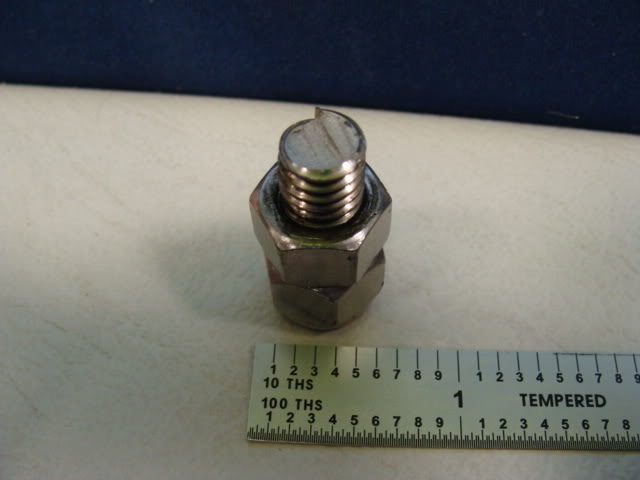
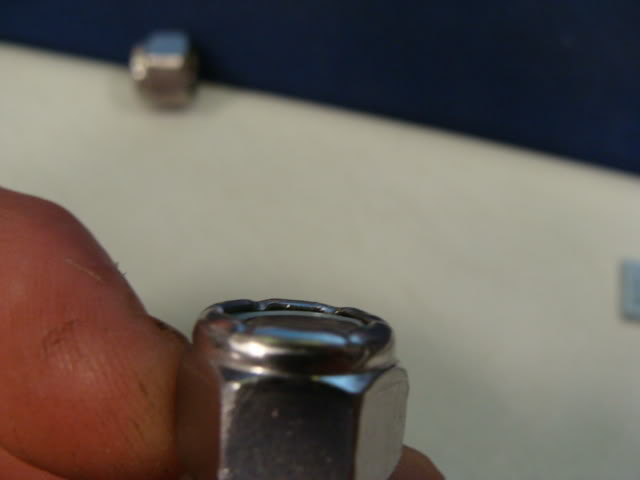
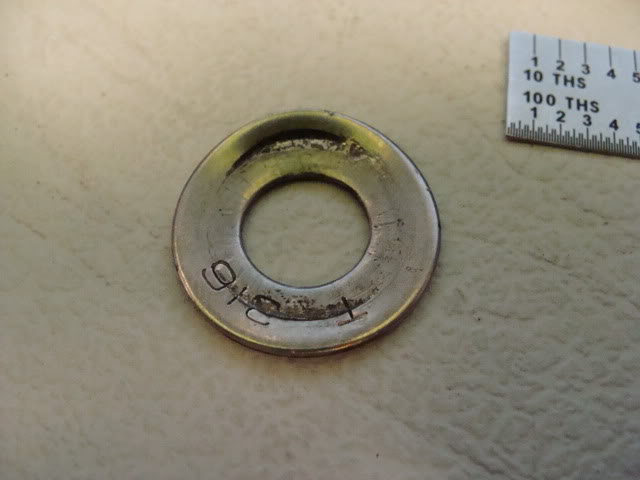
The rod is ASTM rated 316.
The mount had to compress the poly bushing (Energy Suspension endlink bushing) before taking up that load and snapping. The rod broke in the rubber block, not at the stress/bend point where it passes through the steel, and it'* clearanced through the steel, not interferenced.
Here'* the pics:

Junior Member
Joined: Jun 2002
Posts: 0
Likes: 0
That appears to be a fatigue failure initiated from the stress concentration at the root of the threads.
Going to a higher strength bolt may not help you.
The only way to protect against fatigue failure is to pre tension the bolt beyond the cyclical stresses it will see in service.
(edit) Your bolt, like mine, is in almost pure tension. That stainless rod is the equivalent to a grade 2 bolt.
Going to a higher strength bolt may not help you.
The only way to protect against fatigue failure is to pre tension the bolt beyond the cyclical stresses it will see in service.
(edit) Your bolt, like mine, is in almost pure tension. That stainless rod is the equivalent to a grade 2 bolt.
Thread Starter
Junior Member
Posts like a Ricer Type-R
Joined: Aug 2002
Posts: 11
Likes: 13
Paul, you saw all versions of the mount except this in person. There is very little if any bending force applied.
Other forces combined (other than pure tension) will comprise less than 10% of the load forces. Greyhare concurs (he'* seen this more than anyone, is very familiar with it, and was with me when it went today).
The ultimate fix would be to buy a Carbon Steel rod, thread each end, and have it treated. But I think I can do almost as good with off-the shelf replacement components. This mount was designed as adjustable, but I never backed it off. It'* been in 'track mode' since I installed it for testing. With a stronger rod/bolt, and used as intended, it'll do fine.
Other forces combined (other than pure tension) will comprise less than 10% of the load forces. Greyhare concurs (he'* seen this more than anyone, is very familiar with it, and was with me when it went today).
The ultimate fix would be to buy a Carbon Steel rod, thread each end, and have it treated. But I think I can do almost as good with off-the shelf replacement components. This mount was designed as adjustable, but I never backed it off. It'* been in 'track mode' since I installed it for testing. With a stronger rod/bolt, and used as intended, it'll do fine.

