When you click on links to various merchants on this site and make a purchase, this can result in this site earning a commission. Affiliate programs and affiliations include, but are not limited to, the eBay Partner Network.
1993Buick Park Ave will not start-Resolved, bypassed VATS PassKey II Module AT modul
My 1993 Buick Park Ave would not start as of mid June 2019. I resolved the issue this morning 13Aug2019. I found a company that sells a pricey module.. Took about an hour to install. I had no security light, I could jumper the starter solenoid at the starter, engine turnover and almost wanted to start?
From the steering column there is an orange wire with two white wires connecting to a connector on the drivers side, over the life of the car the wire will break and prevent starting as result of a security issue.. I have a key 3 value 660 ohms OR 680 ohms. I went on YouTube and bridge these two wires with the proper resistor values to match the key resistor value. This bridging is suppose to be a quick fix to fool the Passcode Module into thinking the correct key has been inserted. The Passcode module circuitry controls whether the car will CRANK in addition to allowing FUEL to the engine.
Bridging the two white wires with the correct resistor values did not resolve my issue. After two shops and three tows, The first shop replaced the ignition cylinder that connects the key value to the Passcode module via the two white wires from the ignition switch $88 ignition switch $150 labor..Second shop was a specialty shop.$125.50 diagnostic test came up empty..
This did not resolve the issue, the dealership did not want to work on the Buick due to the age and parts availability, dealership recommend a specialty shop, . I had my Buick towed home from the specialty shop.
Footnote, the electrical schematic showed a purple white wire, I did not see any color coding on the two white wires enclosed within the orange wire from the ignition switch on the steering column. I decided to use an inspection mirror on the backside to the connector leading out of the connector block the color coding of purple white was visible. Theses two white wires fortunately are the closest to the accelerator. I used my ohm meter and checked the continuity from the driver side to the purple and white wire B7 purple and white wire on the connector to the Passcode module. meaning I did not have an open circuit/broken wire. .
I've attached images of Theft Deterrent wiring diagram, My Passcode Key II Module connectors and wiring located on the Passenger Side behind the glove box. The Passkey Module is secured by either a by two 5mm or 7mm screws. This pricey module has claims from NewRockies to bypass 83 GMC vehicles ranging from 1983 up to 2011. Question is how many cars have been taken to the salvage yard with this security issue. I was doing some serious shopping for a replacement vehicle. Google search has a Promo Code "savemycar" that reduce the price by 10% of the bypass module. No need for a special key.
Thanks the reply, took two months of trial and error and $500 dollar to the two shops, for zero results.
. I was searching for cars on Craigslist for replacing my Buick with 144,800 miles.
The autobot on the site bit me,when first joining, for I replied to a post 6 months or older. I got a 1 point warning.
I did not post these links, for I do not know all the rules. Hopefully this is a private message reply. Being a Senior Citizen, these days I am not always politically correct in my views.
These are the links to the modules that connect directly to the OEM Passcode connector. Feel free to share these links
If I am understanding this right, it looks like the module just replaces the Theft deterrent module?
Does it still require the starter enable relay to be bypassed, or is it an all in one solution?
Admittedly, there are much cheaper ways to accomplish what this unit does, but I can't argue with the packaging it appears to claim.
And, the PassKey bypass usually gets 95% of them (just guessing), although theft deterrent modules have been known to fail. The biggest problem with the bypass is resistor values not matching up, because they are loosely spec'd. I had to dial mine in with an ohmmeter and then it worked.
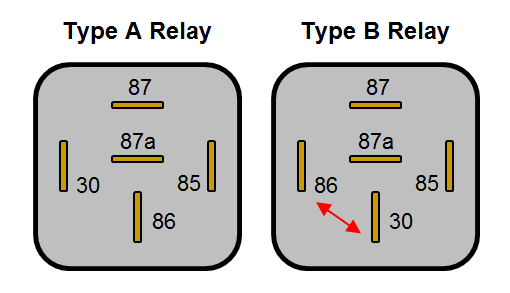
Suggestion from a BestBuy tech (the tech installs remote start, security systems for autos, and must be able to trick the autos security system). Connect a jumper wire between 87a and 30 (not the hot side of the relay) If the relay is a four connector relay then bridge 87 to 30 for 87a will not be available.
In regards to the Starter Enabler Relay issue remove the relay and bridge the wire between wires 87 and 30. This removes the relay bypasses the relay.
My issue I have searched to high heavens for my Starter Enabler relay, It must be a ghost. I do not believe it exists in the location in my 93 Park Ave/La Sabre shop manuals.
I suggest before you do anything I suggested is ask a professional, for I am by the seat of the pants, Youtube junkie. Hope this helps
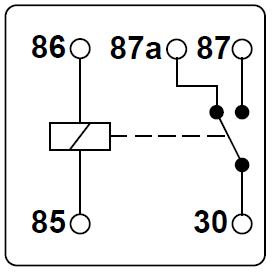
Here is a link that maybe of interest on how relays function. https://www.12voltplanet.co.uk/relay-guide.html . Relays I once viewed as complicated, Relays usually have four or five posts/connectors (my Buick uses the five connector) Basically 85 and 86 are the coils to creating a magnet when a low voltage is applied to the coil making or breaking the connection.
. Changeover relay
Two circuits (terminals 87 and 87a ) have a common terminal (30). When the relay is at rest 87a is connected to 30, and when the relay is energized 87 becomes connected to 30 (but never both at the same time).
Originally Posted by rjolly87
If I am understanding this right, it looks like the module just replaces the Theft deterrent module?
Does it still require the starter enable relay to be bypassed, or is it an all in one solution?
Admittedly, there are much cheaper ways to accomplish what this unit does, but I can't argue with the packaging it appears to claim.
And, the PassKey bypass usually gets 95% of them (just guessing), although theft deterrent modules have been known to fail. The biggest problem with the bypass is resistor values not matching up, because they are loosely spec'd. I had to dial mine in with an ohmmeter and then it worked.



 1993Buick Park Ave will not start-Resolved, bypassed VATS PassKey II Module AT modul








 . Changeover relay