


Now Misfire #3

Senior Member


True Car Nut
Joined: Jun 2011
Posts: 3,493
Likes: 613
From: VA


I don't have any on my 2006 Grand Prix thankfully, they are deff a pain in the ***...
If the wires in the rear on Park Ave'* are ran right, through the wire guides or whatever you call them, then the boots seem to stay away from touching anything, but I guess having them couldn't hurt.
If the wires in the rear on Park Ave'* are ran right, through the wire guides or whatever you call them, then the boots seem to stay away from touching anything, but I guess having them couldn't hurt.

Thread Starter
Senior Member


True Car Nut
Joined: Jan 2012
Posts: 4,911
Likes: 624
From: BC Canada
One thing is for sure, the plugs got a hint of anti-seize on threads.
The boots interior will again get treated with di-electric grease.
After 9 years the grease was long gone, and boots got welded to the plug anyways.. lol.
The boots interior will again get treated with di-electric grease.
After 9 years the grease was long gone, and boots got welded to the plug anyways.. lol.
__________________
1997 Buick Pk Ave (Soft Ride) Suspension!
1997 Buick Pk Ave (Soft Ride) Suspension!
Last edited by Soft Ride; May 18, 2021 at 02:15 AM.
Thread Starter
Senior Member
True Car Nut
Joined: Jan 2012
Posts: 4,911
Likes: 624
From: BC Canada
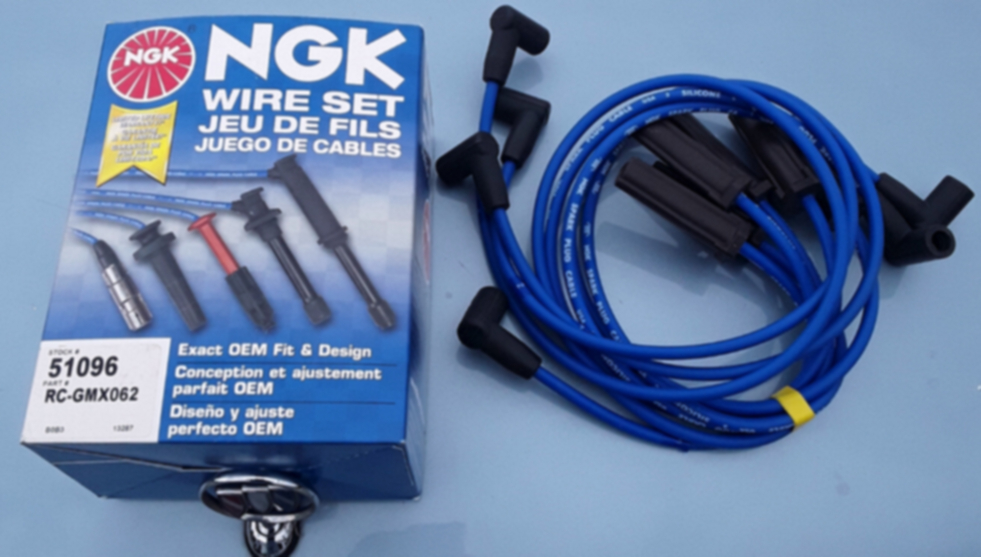
Today the new NGK #51096 spark plug wires arrived. They fit the Park Ave and Lesabre normally aspirated. Super charged models have a different part number.
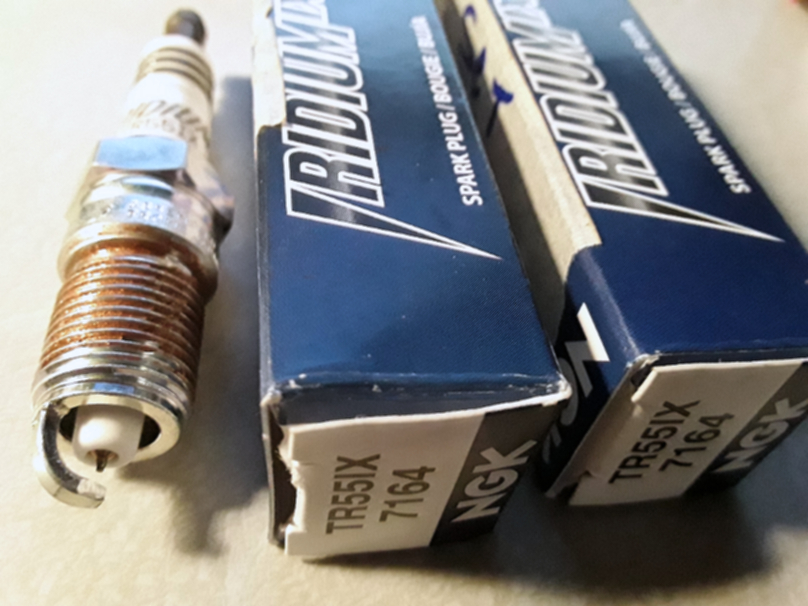
To complete this job is to install 3 new NGK Iridium #7164 or TR55IX spark plugs up front. Rear Plugs replaced a week or so ago.
Have copper anti-seize on threads,almost ready for install. Gaps are set to .060.
This should keep the Buick happy for quite a while now.
To complete this job is to install 3 new NGK Iridium #7164 or TR55IX spark plugs up front. Rear Plugs replaced a week or so ago.
Have copper anti-seize on threads,almost ready for install. Gaps are set to .060.
This should keep the Buick happy for quite a while now.
__________________
1997 Buick Pk Ave (Soft Ride) Suspension!
1997 Buick Pk Ave (Soft Ride) Suspension!
Senior Member
True Car Nut
Joined: Jun 2011
Posts: 3,493
Likes: 613
From: VA
Good plugs and wires, however I am not sure I'll use ant seize on threads that are basically made to be anti seize, AC Delco suggests not to, also so does NGK... Let me look...
NGK spark plugs feature trivalent plating. This silver or chrome-colored finish on the threads is designed to provide corrosion resistance against moisture and chemicals. The coating also acts as a release agent during spark plug removal. NGK spark plugs are installed at the factory dry, without lubrication or anti-seize.
Anti-seize can act as a lubricant, altering torque values up to 20 percent, increasing the risk of spark plug thread breakage and/or metal shell stretch. Thread breakage can sometimes involve removing the cylinder head for repair. Metal shell stretch changes the heat rating of the spark plug and can result in serious engine damage caused by pre-ignition. Do not use anti-seize or lubricant on NGK spark plugs. It is completely unnecessary and can be detrimental.
2. Corona stain
Corona stain is a light brown or tan discoloration on the outside of the ceramic insulator above the metal shell/hex. Corona stain is created by the high voltage traveling thru the plug that attracts the dirt or oil particles surrounding the exposed ceramic insulator between the wire/coil boot and spark plug metal shell. Corona stain is completely normal and should not be mistaken for exhaust gas blow-by or a broken seal inside the spark plug.
3. Gapping fine-wire spark plugs
While most NGK spark plugs are pre-gapped, there are occasions when the gap requires adjustment. Care must be taken to avoid bending or breaking off the fine-wire electrodes. NGK recommends a round wire-style or pin gauge gap tool to measure the gap. If the gap must be adjusted, use a tool that only moves the ground electrode and does not pry between or against the electrodes. NGK also recommends adjusting the gap no more than +/- 0.008” from the factory preset gap.
4. Torque
Torque is crucial in the ability of the plug to dissipate heat and perform properly. Always follow the manufacturer recommended torque specification. An under-torqued spark plug can lead to excessive vibration and improper heat dissipation, causing spark plug and/or engine damage. Over torquing may cause any of the following: thread damage/breakage, compromised internal seals leading to gas leakage, metal shell stretch leading to poor heat dissipation and pre-ignition.
5.“Copper spark plugs”
“Copper spark plugs” is a term often used to describe a standard material spark plug. However, this terminology is incorrect, as standard material plugs do not have electrodes made from copper. Copper is soft with a low melting point and cannot be used for electrodes, as they would wear very quickly. A standard material spark plug uses a nickel-alloy that may include a small copper core. The copper core has nothing to do with the electrical performance of the spark plug. A copper core is used to increase heat dissipation and durability by lowering the electrode temperatures. Nearly all NGK spark plugs, including precious metal iridium and platinum plugs, have a copper core to increase the electrode durability. Special nickel alloys, platinum, and iridium electrodes, along with copper cores are all used to enhance durability – durability meaning how long a spark plug will last before it needs to be replaced.
https://ngksparkplugs.com/en/resourc...ut-spark-plugs
5 THINGS YOU SHOULD KNOW ABOUT SPARK PLUGS
1. Anti-seizeNGK spark plugs feature trivalent plating. This silver or chrome-colored finish on the threads is designed to provide corrosion resistance against moisture and chemicals. The coating also acts as a release agent during spark plug removal. NGK spark plugs are installed at the factory dry, without lubrication or anti-seize.
Anti-seize can act as a lubricant, altering torque values up to 20 percent, increasing the risk of spark plug thread breakage and/or metal shell stretch. Thread breakage can sometimes involve removing the cylinder head for repair. Metal shell stretch changes the heat rating of the spark plug and can result in serious engine damage caused by pre-ignition. Do not use anti-seize or lubricant on NGK spark plugs. It is completely unnecessary and can be detrimental.
2. Corona stain
Corona stain is a light brown or tan discoloration on the outside of the ceramic insulator above the metal shell/hex. Corona stain is created by the high voltage traveling thru the plug that attracts the dirt or oil particles surrounding the exposed ceramic insulator between the wire/coil boot and spark plug metal shell. Corona stain is completely normal and should not be mistaken for exhaust gas blow-by or a broken seal inside the spark plug.
3. Gapping fine-wire spark plugs
While most NGK spark plugs are pre-gapped, there are occasions when the gap requires adjustment. Care must be taken to avoid bending or breaking off the fine-wire electrodes. NGK recommends a round wire-style or pin gauge gap tool to measure the gap. If the gap must be adjusted, use a tool that only moves the ground electrode and does not pry between or against the electrodes. NGK also recommends adjusting the gap no more than +/- 0.008” from the factory preset gap.
4. Torque
Torque is crucial in the ability of the plug to dissipate heat and perform properly. Always follow the manufacturer recommended torque specification. An under-torqued spark plug can lead to excessive vibration and improper heat dissipation, causing spark plug and/or engine damage. Over torquing may cause any of the following: thread damage/breakage, compromised internal seals leading to gas leakage, metal shell stretch leading to poor heat dissipation and pre-ignition.
5.“Copper spark plugs”
“Copper spark plugs” is a term often used to describe a standard material spark plug. However, this terminology is incorrect, as standard material plugs do not have electrodes made from copper. Copper is soft with a low melting point and cannot be used for electrodes, as they would wear very quickly. A standard material spark plug uses a nickel-alloy that may include a small copper core. The copper core has nothing to do with the electrical performance of the spark plug. A copper core is used to increase heat dissipation and durability by lowering the electrode temperatures. Nearly all NGK spark plugs, including precious metal iridium and platinum plugs, have a copper core to increase the electrode durability. Special nickel alloys, platinum, and iridium electrodes, along with copper cores are all used to enhance durability – durability meaning how long a spark plug will last before it needs to be replaced.
https://ngksparkplugs.com/en/resourc...ut-spark-plugs

Thread
Thread Starter
Forum
Replies
Last Post
BusMaster007
Performance, Brainstorming & Tuning
4
Apr 2, 2003 06:48 AM

