


93 SSEI Supercharger Rattle I think??


Okie Hokie
Posts like a Camaro
Joined: Dec 2008
Posts: 1,107
Likes: 1
From: Durant, Ok 74701


the m90s are for the series 2 motors and i know they will NOT bolt onto the intake manifold on a series 1... good for parts tho, or a motor upgrade, or POSSIBLY... putting on a intake off a series 2? think'n the block is the same, right?, couldnt one use the newer intake and the newer supercharger? just wishful thinkin and possible help to others 

DINOSAURUS BOOSTUS


Expert Gearhead
Joined: Mar 2005
Posts: 41,391
Likes: 30
From: Enfield, CT


The 95 Buick 3.8 is going to be an M62, aka the same charger you have wihich is good. Check the coupler on it by turning the pulley back and forth quickly. Any clunking and it'* no better than yours.
The Ford M90'* are a different monster from the GMs. And the GM S1 vs S2 heads are totally different that make it impossible TMK to bolt one up easily. Easily being the key.
The Ford M90'* are a different monster from the GMs. And the GM S1 vs S2 heads are totally different that make it impossible TMK to bolt one up easily. Easily being the key.

Junior Member
Posts like a V-Tak
Joined: Nov 2004
Posts: 27
Likes: 0
From: Calgary Alberta
I have a 93 SSEI from birth. 180K km. 110K miles. Has similar noise problems - first thought to be SC tensioner - but that has been replaced by dealership and noise still there and as you describe.
Where in Calgary Alberta - can I get good diagnosis and treatment.
Where in Calgary Alberta - can I get good diagnosis and treatment.
Junior Member
Posts like a V-Tak
Joined: Nov 2004
Posts: 27
Likes: 0
From: Calgary Alberta
Gearhead: Have read your many posts re this problem and learned a lot. Thank you.
Is it too much to expect that the Pontiac dealership that has serviced car from day 1 might have done this when changing of SC tensioner that they thought was the source of problem. They now think it is the SC making noise - but have not mentioned the coupler. The noise disappears with increased RPM. And car performs as it always did.
I am not about to change anything until I have reliable assessment.
Is it too much to expect that the Pontiac dealership that has serviced car from day 1 might have done this when changing of SC tensioner that they thought was the source of problem. They now think it is the SC making noise - but have not mentioned the coupler. The noise disappears with increased RPM. And car performs as it always did.
I am not about to change anything until I have reliable assessment.

Senior Member
True Car Nut
Joined: Sep 2008
Posts: 7,979
Likes: 2
From: Arlington, WA
Gearhead: Have read your many posts re this problem and learned a lot. Thank you.
Is it too much to expect that the Pontiac dealership that has serviced car from day 1 might have done this when changing of SC tensioner that they thought was the source of problem. They now think it is the SC making noise - but have not mentioned the coupler. The noise disappears with increased RPM. And car performs as it always did.
I am not about to change anything until I have reliable assessment.
Is it too much to expect that the Pontiac dealership that has serviced car from day 1 might have done this when changing of SC tensioner that they thought was the source of problem. They now think it is the SC making noise - but have not mentioned the coupler. The noise disappears with increased RPM. And car performs as it always did.
I am not about to change anything until I have reliable assessment.

Thread Starter
Junior Member
Posts like a Ricer Type-R
Joined: Oct 2008
Posts: 12
Likes: 0
From: Saskatoon Sask. Canada
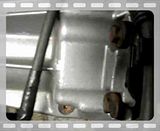
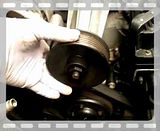
Ok It has been a while but yesterday i finally had the time to tackle my supercharger coupler,(which was a lot easier than i anticipated) So after changing coupler,cleaning injectors, changing gaskets. and SC oil, I put it all back together and started her up...........AND...the rattle was still there....so I am stumped..i did the screwdriver test to listen for vibration and to my untrained eyes and ears i would swear the sound is coming from the belt tensioner....this is so odd I thaught for sure it was the coupler because the rattle stopped whenever rpms hit 12-1500....Could it be as easy as the tension pully?? If not the only other thing it could be is the water pump? Any guidance from our experts would be greatly appreciated......thanks Jay

Retired Senior Admin
Expert Gearhead
Joined: May 2006
Posts: 29,661
Likes: 43
From: Sheboygan Wisconsin
Take the belt off again and turn each pulley and listen, as well as feel. This is why I suggested doing the test first. It'* best to test before throwing parts at the problem.