


Who's still interested in THIS?


Senior Member
Posts like a Turbo
Joined: Feb 2005
Posts: 228
Likes: 0
From: Western New York State


I would so still be interested, I had thoughts on how to to it, but I never did. If you could make it so like we talked before I would definitely get one. Also if I may make a suggestion, I heard that having the ends circle the tops of the struts can help significantly itself...instead of the two bolt mounting on the inside. Just a thought, I think it'd help even more.

Thread Starter
Junior Member
Posts like a Ricer Type-R
Joined: Aug 2002
Posts: 11
Likes: 13
Originally Posted by macho_mike21
what points are you going to attach it to in the front?
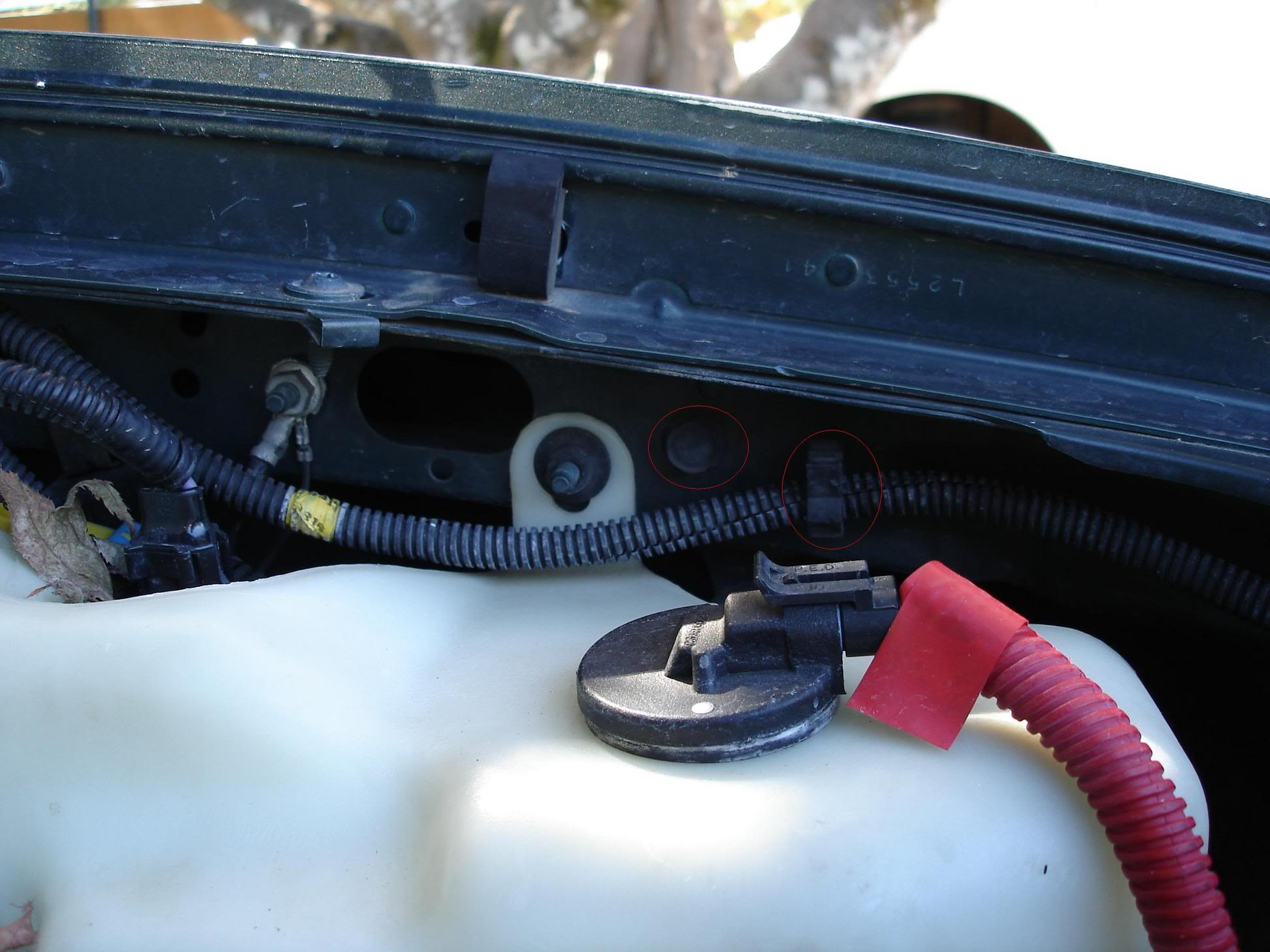
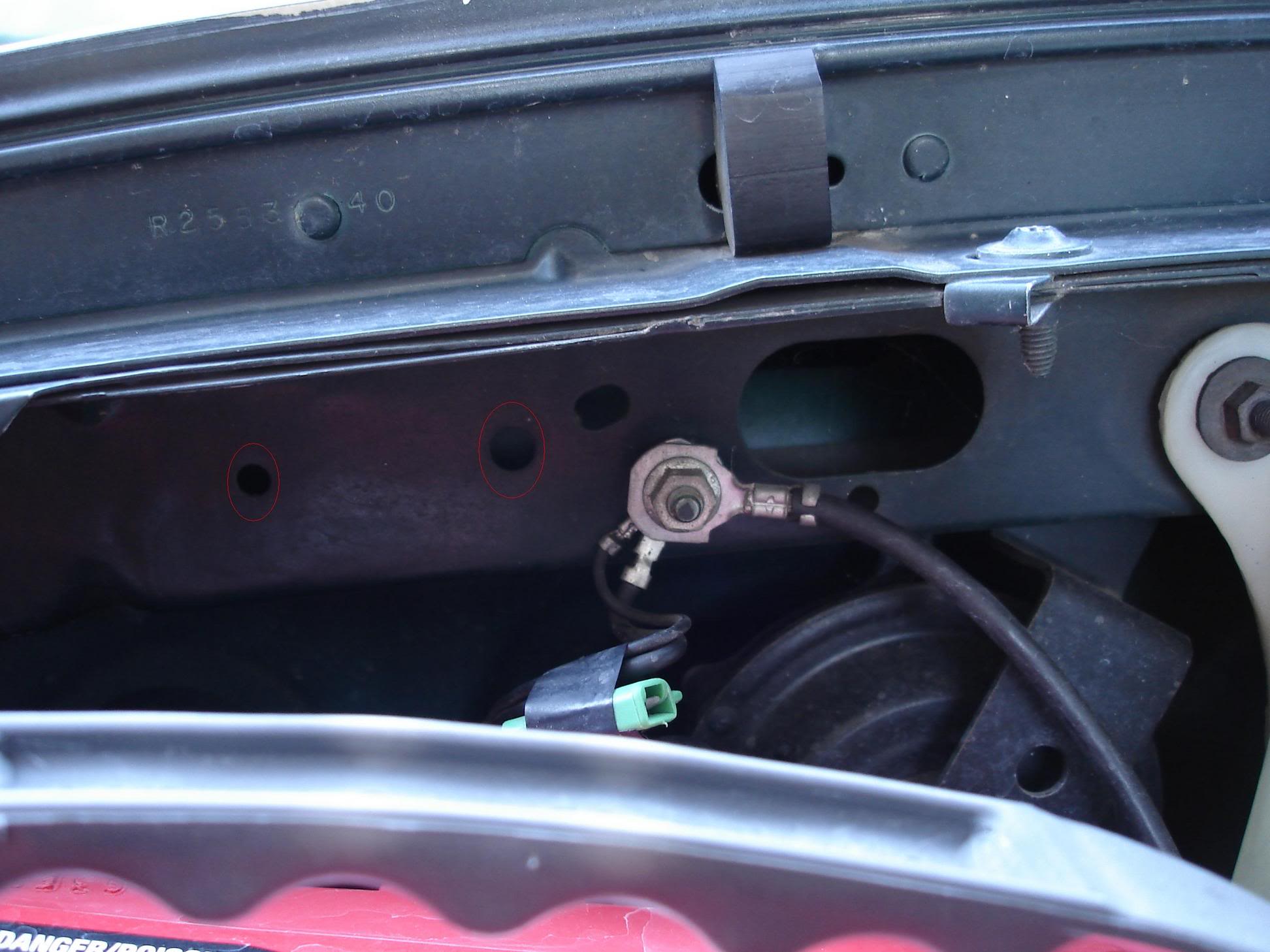
If you look closely you'll see where I outlined the mounting holes in red. This is the strongest part of the inner fender liner.

Thread Starter
Junior Member
Posts like a Ricer Type-R
Joined: Aug 2002
Posts: 11
Likes: 13
No idea on price. We'll work that out as we work it up, so to speak. 
It'll probably go on the 95 for starters, as the 93 may be still in the trans shop next weekend. But I'll end up swapping it back to the 93 for testing. That'* a much more stable platform.
It'll probably go on the 95 for starters, as the 93 may be still in the trans shop next weekend. But I'll end up swapping it back to the 93 for testing. That'* a much more stable platform.

Senior Member
Posts like a Supercharger
Joined: Jul 2005
Posts: 198
Likes: 0
From: Zimmerman, MN.

Yes, but what you’re doing would be like tipping a bridge on its side and then asking vehicles to drive on it. That design has no big advantage for keeping the strut towers from flexing inward. The whole unit will still lift and contact the hood and allow the towers to flex inward.
A big beefy I beam or a couple of smaller ones would be much more efficient at eliminating the flex of the towers. But that’* just my opinion, I'm not a mechanical engineer.
Thread Starter
Junior Member
Posts like a Ricer Type-R
Joined: Aug 2002
Posts: 11
Likes: 13
You're not thinking in the load axis. For a bridge, it'* vertical. For our purposes, it'* horizontal. The force applied is in a different axis. But the same load bearing procedure applies.
Let me try to explain it in simpler terms:
On a bridge, the load is vertical. It needs to support the load (weight) of the cars, and oppose gravity.
On handling for the car, the swaybars and strut tower bars come into play on LATERAL loads, or cornering. The more you stiffen it laterally, the better feedback or stability you get in cornering.
It'* the same principal, but 90 degrees opposed to a weight-bearing design.
Let me try to explain it in simpler terms:
On a bridge, the load is vertical. It needs to support the load (weight) of the cars, and oppose gravity.
On handling for the car, the swaybars and strut tower bars come into play on LATERAL loads, or cornering. The more you stiffen it laterally, the better feedback or stability you get in cornering.
It'* the same principal, but 90 degrees opposed to a weight-bearing design.