When you click on links to various merchants on this site and make a purchase, this can result in this site earning a commission. Affiliate programs and affiliations include, but are not limited to, the eBay Partner Network.
The 2021 Consumer electronics show has many GM Ev stories to follow.
GM'* opening statement: Zero Crashes, Zero Emissions, Zero Congestion.
First off, the Bolt to be released this year, will also feature the autonomous super cruise technology.
A mobile phone app will be available soon allowing users remote access and much more.
An all new stacking platform of energy cells in house, is shared in co-operation with LG.
There will be a new crossover, and let'* not forget about the New Hummer Ev.
There are some catchy new names ahead, LYRIC and how about CELESTIQ..
Are full sized Ev Vans to be released with compartmental off loading for FedEx & Other commercial companies?
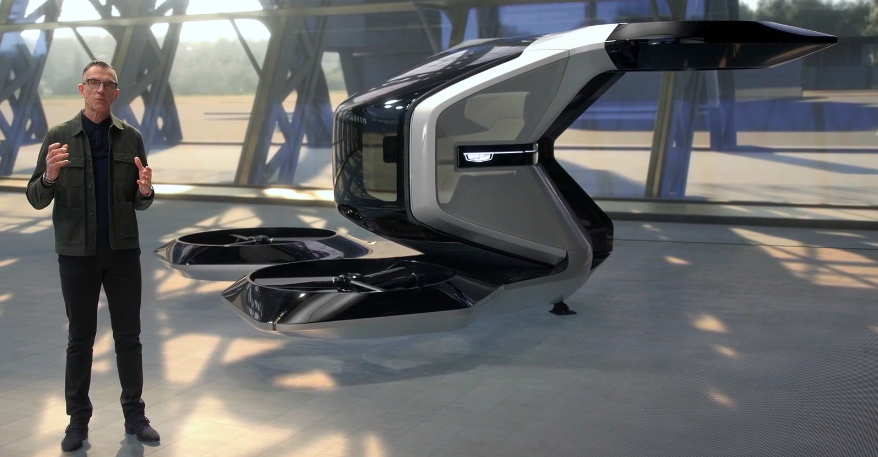
Last but not least, will our future have us flying in a GM single person VTOL out to our next destination..Really ??
Our future is about to get interesting !!
Watch this GM video to find out more !
I believe under normal highway operating condition the super cruise technology will make things safer.
Nothing however will replace an actual driver that probably can react & make decision quicker, in a hazard & avoid scenario.
Congestion,in metropolitan cities is not going away anytime soon.
Obviously we will be driving our-self in stop & go traffic, with braking & lane departure controls still active.
I need to find a dealership and do some test driving in an Ev..
The owners manual will provide an interesting overview and the driving aspects may very well be my next article.
I've done some recent research on the EV technology in regards to the charging stations as well as the charging times.
I had them all posted somewhere else but the number of charging stations is going to grow massively to say the least but that'* only half of what most folks want to know. Mostly the question is about the charging times.
Currently these are:
Level 1 AC-Basically home charging that takes overnight to achieve full charge
Level 2 AC- Remote Charging that takes 3-8 hours to full charge and....
Level 3 DC Fast Charge that takes roughly 20 minutes to 1 hour to charge to a 160 mile distance for $11.
I will get excited about electric vehicles when we can refuel them in a matter of minutes like we do with petrol powered vehicles. I was looking at the new mustang with the 300 miles; well, that wouldn't get me down to the seaside. It would be OK for a daily commute where you can plug it in each night but no holiday travel without spending extra to stop overnight and find somewhere to plug it in.
I will get excited about electric vehicles when we can refuel them in a matter of minutes like we do with petrol powered vehicles. I was looking at the new mustang with the 300 miles; well, that wouldn't get me down to the seaside. It would be OK for a daily commute where you can plug it in each night but no holiday travel without spending extra to stop overnight and find somewhere to plug it in.
You are among the many of the general public that have that same concern. I just don't see where 300 or even the those that are on the upper tier of the range at 450 miles and having to stop to recharge for an hour or more, especially in our high paced society where there is little patience for the inconvenience of long charge times. Additionally I don't know how long it will take for the number of remote charging stations that need to be installed to keep up with the future demand of all these cars will take but it sure isn't going to be overnight. I guess we'll see what happens.
I just don't see where 300 or even the those that are on the upper tier of the range at 450 miles and having to stop to recharge for an hour or more, especially in our high paced society where there is little patience for the inconvenience of long charge times is gonna work.
What is needed is for the manufacturers to get together and decided on a standard design for the batteries/cells so that they can be easily swap out. You pull into a station, pull out your depleted cell and plug in a fully charged cell and on your way in minutes. The station then charges the cells for the next customer. You pay for having a fully charged battery and the easy swap. Most service stations today don't earn money on fuel; that goes to the distributor, they earn on the snacks and such that people buy when they stop.
That sounds like a good plan really. Being manager of a fleet service department I can see where that would even be a problem for some though. I've seen some folks that I would seriously question their ability to do even the most menial tasks.
The weight of a Chevy Bolt battery is just under 1000 lbs.
In it'* "current" configuration, the connections to the battery can not be disconnected for any reason due to safety.
The battery would have to be fully discharged before removal & it'* a longer process than one might hope for.








 GM EV Platform Will Be Exciting Indeed!