


"US vs. Euro" (I know...)


Thread Starter
Junior Member
Joined: Dec 2020
Posts: 5
Likes: 0

 "US vs. Euro" (I know...)
Hi!
This is one thing I've been wondering about for long, and there'* some a bit more detailed stuff I really haven't found anywhere. Since I now even have a "GM", I thought well, why not ask here? Instead of some other place where no one knows anything about cars...
The thing is basically like everyone knows, US cars are you know, huuuge, they're tremendous, nothing like anything seen anywhere else in the world, etc. ...but why exactly? Some things make sense, but then others don't, at all.
Some people on the Internet like to explain that America is a large country, made for cars whereas "Europe" (which obviously is not a country) is 2000 years old, the roads are made for horse carts etc. and I like to think that is really horse ***t if horses need to be involved. Cities and almost entire countries in Europe have been completely rebuilt after the wars, who thinks they built the new roads for horse carts in the 1950'* and 60'*? Or that they still build parking lots and underground halls for horses in THIS century? The parking garages in hospitals etc. are exactly the same as they appear to be in American movies, although they're probably a little smaller.
So none of the usual explanations people like to give really make any sense. People in "Europe" DO own and drive relatively large cars, vans, SUVs etc. What I've been wondering about the most is actually, because these days I understand MOST cars sold are actually exactly the same (US mid-size, Euro "large family car") except that the US models have MUCH larger/more powerful engines. Why are the cars otherwise the same, but not the engines? In "Europe", over 200 horsepower for a passenger car that you drive alone is insane, and actually you can't even get engines that big. But in America that seems to be the standard. I know people who drive vans, SUVs, Land Cruisers etc. and they don't get even close to 200 hp either.
As an example (I know they're compacts), I understand a Chevrolet Cruze and an Opel Astra are basically the same car, but in "Europe" everyone would have the 138 hp engine, and for cars that size/weight, most regular buyers would, and do, easily settle for a 110 hp model or something. Is there some kind of difference in the most common fuel, or something that makes American market cars really NEED double the power for some reason? (I have no political angle, in case it might seem like that, I simply don't understand what are the massive amounts of extra power for?)
And, hi again! I'm new here. I hope I didn't break any rules right away.
This is one thing I've been wondering about for long, and there'* some a bit more detailed stuff I really haven't found anywhere. Since I now even have a "GM", I thought well, why not ask here? Instead of some other place where no one knows anything about cars...
The thing is basically like everyone knows, US cars are you know, huuuge, they're tremendous, nothing like anything seen anywhere else in the world, etc. ...but why exactly? Some things make sense, but then others don't, at all.
Some people on the Internet like to explain that America is a large country, made for cars whereas "Europe" (which obviously is not a country) is 2000 years old, the roads are made for horse carts etc. and I like to think that is really horse ***t if horses need to be involved. Cities and almost entire countries in Europe have been completely rebuilt after the wars, who thinks they built the new roads for horse carts in the 1950'* and 60'*? Or that they still build parking lots and underground halls for horses in THIS century? The parking garages in hospitals etc. are exactly the same as they appear to be in American movies, although they're probably a little smaller.
So none of the usual explanations people like to give really make any sense. People in "Europe" DO own and drive relatively large cars, vans, SUVs etc. What I've been wondering about the most is actually, because these days I understand MOST cars sold are actually exactly the same (US mid-size, Euro "large family car") except that the US models have MUCH larger/more powerful engines. Why are the cars otherwise the same, but not the engines? In "Europe", over 200 horsepower for a passenger car that you drive alone is insane, and actually you can't even get engines that big. But in America that seems to be the standard. I know people who drive vans, SUVs, Land Cruisers etc. and they don't get even close to 200 hp either.
As an example (I know they're compacts), I understand a Chevrolet Cruze and an Opel Astra are basically the same car, but in "Europe" everyone would have the 138 hp engine, and for cars that size/weight, most regular buyers would, and do, easily settle for a 110 hp model or something. Is there some kind of difference in the most common fuel, or something that makes American market cars really NEED double the power for some reason? (I have no political angle, in case it might seem like that, I simply don't understand what are the massive amounts of extra power for?)
And, hi again! I'm new here. I hope I didn't break any rules right away.

Retired
Certified Car Nut
Joined: Jul 2003
Posts: 17,960
Likes: 1,839
From: Dark Side, AZ

Land of the muscle car.
Some people are claustrophobic.
We like variety.
Correct, we have some cities/towns built for horse carriage, but the rest of the country is wide open. So we have every scope of driving opportunity available.
Last but not least... because Murica!
We have like the strictest EPA laws, yet our 1000HP Hellcat engines probably produce less emissions then your 4 cylinder 90HP Yugo engine.(no insult insinuated)
But welcome to the US side of automobiles.
Some people are claustrophobic.
We like variety.
Correct, we have some cities/towns built for horse carriage, but the rest of the country is wide open. So we have every scope of driving opportunity available.
Last but not least... because Murica!
We have like the strictest EPA laws, yet our 1000HP Hellcat engines probably produce less emissions then your 4 cylinder 90HP Yugo engine.(no insult insinuated)
But welcome to the US side of automobiles.
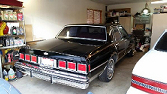
Thread Starter
Junior Member
Joined: Dec 2020
Posts: 5
Likes: 0
Thanks! Yeah, don't get me wrong, I actually WOULD have gotten the uh... whatever the next one up is from the 103 KW engine for my Astra, but those aren't available and I needed a car.
What I mean is simply, back in the day, a 2.0 gas engine with 120 hp was BIG (in the famous imaginary country of "Europe"). Those were exactly the days when "regular Joes" always had 1.6/95 hp engines if it was just them and a couple of kids, or definitely if it was just them driving alone. 2 liters were for stuff like station wagons, tons of stuff in the back, maybe a trailer etc., where there really were situations where anything under 100 hp was just too weak. And these days 2 liters do 140 hp, not 120. So I guess you can kind of imagine how weird it seems, just thinking that in the states people are regularly driving something with two HUNDRED hp.
I do completely get it in the case of large pickups, SUVs, the kind of stuff that doesn't have an equivalent anywhere outside the US (they're too heavy, mostly, you could not register them as passenger cars). But a compact or mid-size car, that'* a little different. Their performance even with the smaller engines is almost too much (too fast for the average guy to handle). That'* why I thought about e.g. the available gas. Less octanes, less power? I don't know. Euro regular gas is 95 or 98 octane across the board.
What I mean is simply, back in the day, a 2.0 gas engine with 120 hp was BIG (in the famous imaginary country of "Europe"). Those were exactly the days when "regular Joes" always had 1.6/95 hp engines if it was just them and a couple of kids, or definitely if it was just them driving alone. 2 liters were for stuff like station wagons, tons of stuff in the back, maybe a trailer etc., where there really were situations where anything under 100 hp was just too weak. And these days 2 liters do 140 hp, not 120. So I guess you can kind of imagine how weird it seems, just thinking that in the states people are regularly driving something with two HUNDRED hp.
I do completely get it in the case of large pickups, SUVs, the kind of stuff that doesn't have an equivalent anywhere outside the US (they're too heavy, mostly, you could not register them as passenger cars). But a compact or mid-size car, that'* a little different. Their performance even with the smaller engines is almost too much (too fast for the average guy to handle). That'* why I thought about e.g. the available gas. Less octanes, less power? I don't know. Euro regular gas is 95 or 98 octane across the board.
Thread Starter
Junior Member
Joined: Dec 2020
Posts: 5
Likes: 0
Yeah. Or I don't know "originally", can't remember back hundreds of years. Could be really really originally Sweden, Germany or something. Anyway, that'* actually one factor in where the Internet experts of everything are... wrong. They try to explain it like every place in "Europe" is exactly the same as some mega cramped city in southern ITALY, where it happens to be true that only really small cars are feasible at all.
But up north, for example... there'* plenty of open road, roads that were built much, much more recently etc. There'* nothing stopping people from having pretty large cars, which is why they have them. Kind of like people in the US or Canada, eh, a little bit even. Long distances, need to be able to fit stuff in there and a desire not to feel too cramped or restricted.
But up north, for example... there'* plenty of open road, roads that were built much, much more recently etc. There'* nothing stopping people from having pretty large cars, which is why they have them. Kind of like people in the US or Canada, eh, a little bit even. Long distances, need to be able to fit stuff in there and a desire not to feel too cramped or restricted.
Thread Starter
Junior Member
Joined: Dec 2020
Posts: 5
Likes: 0
Land of the muscle car.
Some people are claustrophobic.
We like variety.
Correct, we have some cities/towns built for horse carriage, but the rest of the country is wide open. So we have every scope of driving opportunity available.
Last but not least... because Murica!
We have like the strictest EPA laws, yet our 1000HP Hellcat engines probably produce less emissions then your 4 cylinder 90HP Yugo engine.(no insult insinuated)
Some people are claustrophobic.
We like variety.
Correct, we have some cities/towns built for horse carriage, but the rest of the country is wide open. So we have every scope of driving opportunity available.
Last but not least... because Murica!
We have like the strictest EPA laws, yet our 1000HP Hellcat engines probably produce less emissions then your 4 cylinder 90HP Yugo engine.(no insult insinuated)
I live next door to a guy actually, who has a small collection of (actually) American cars. At least some imported US Chevy and some sort of pickup. Another garage a block away has a couple of Pontiac'* or something in there, not familiar with them myself. Some people like them, have them, drive them, always have. One family friend ALWAYS had a US car. Had a US license I think, didn't even know how to drive a stick. Euro automatics were much more rare back then (AND automatics of any kind had a... stigma). I even remember one guy who had a "Ghostbusters Caddy" (must've been 25 years ago now, though). For me though, it'* very obvious why some wanted them regardless of the price.
I'm not familiar at all with the EPA, or what'* in the LAWS... one thing though that wasn't mentioned was that the larger Euro vans, SUVs and even many passenger cars are diesels (turbodiesels even). People towing their boat (or their home) with a diesel Volvo was an extremely common sight. Police cars are typically turbodiesels. Those things rarely have 200 hp but they have a lot of torque. Diesels are practically non-existent in the US afaik so that'* one aspect.
How is it factually with the emission thing though? There were a few good years inbetween, but in recent (VERY recent) years, there'* a different reason for Euro cars to still continue to have smaller engines: taxes. TAXES. They're insane. You're completely free to choose between a 150 hp 2 liter and a 220 hp 2,5 L V6, but you'll be paying DOUBLE the annual taxes for that V6. They also keep adding more and more mandated bioethanol, shipped from the other side of the planet, to pump gas, in fact pure gasoline (from pumps) hasn't been available for almost 10 years. Etc. That'* the European Union for you. They're doing all sorts of stuff to make car ownership and driving more difficult, and at the same time promoting new hybrids and electric cars. Where is anyone going to drive an electric car if all the roads have been narrowed by half to add dedicated bus lanes and extra bicycle lanes on both sides? What percentage of the population is even able to ride bicycles in slosh and/or well below freezing temps? The "environmentalists" are f***ed in the head.
One reason I continue to have a car is to make it visible that I still NEED a car. There is no train or bus that can replace it for what I need. And also, I want to enjoy it while it'* possible at all, even if it'* only with 140 hp. :/

Senior Member



True Car Nut
Joined: Feb 2015
Posts: 6,758
Likes: 1,004
From: Earth
I'll elaborate below . . .
Some people on the Internet like to explain that America is a large country, made for cars whereas "Europe" (which obviously is not a country) is 2000 years old, the roads are made for horse carts etc. and I like to think that is really horse ***t if horses need to be involved. Cities and almost entire countries in Europe have been completely rebuilt after the wars, who thinks they built the new roads for horse carts in the 1950'* and 60'*?
"okay we have this vast expanse of flat land to use, let'* use it wisely and plan for the future! . . . oh and also let'* make everything horse-cart sized."
No. Much of it was rebuilt as it was where it was. The streets and building footprints were already established.
In the meantime, in the United States which are in America, much of the East coast was built up much like Europe (but starting a thousand years later), for horses and carriages and early automobiles. The rest of the nation where it was developed, was in smaller footprints similar to the East coast, but with lots of room to expand. In many older sections of large cities you can still find roots of a century ago where the streets were small, and so were the houses. While this was happening, the US was also pumping oil like mad and paying very little for gasoline . . . and still in the afterglow of winning World War 2 and wanting to celebrate. This bred lots of long, low, and heavy chrome-covered land yachts for a couple of decades, as well as a taste for them that still hasn't faded. In the meantime, there were some (much less popular) frugal selections out there such as the Nash and Rambler products and the "compacts" of the 1960s like the Nova and Skylark . . . but then ('MURICA!) we figured out that we could put those giant engines from the full size cars in them and go really fast and make even more tire smoke. We did a similar thing starting in the 1980s with overdrive transmissions; "Wait, this transmission has ANOTHER gear? Now I can put a lower gear ratio in the rear end and have it still be drivable! Whooooo!"
There is something to be said for the horse-cart theory. In the UK and Europe (and other places outside of this conversation'* context), civilization established many roads and then built major populations around them for hundreds of years before even carts were popular . . . in Europe. In the meantime, the US is only a few hundred years old . . . and once we got to the early 1800'*, we kind of went nuts with technology, transportation, and building what we want with few restrictions as to space and rules. It was actually quite the opposite, we as a nation were encouraged to spread out and grab land and build big. One commonality between Europe and the US: In the major city centers where space started out limited in whatever century, there is a large population that desires to live in the city for whatever reason(*), and since space is limited, things are built on small footprints and vertical . . . the congestion creates a drive for solutions to congestion such as increased pedestrian and bicycle paths, buses, light rail, and subways.
What I've been wondering about the most is actually, because these days I understand MOST cars sold are actually exactly the same (US mid-size, Euro "large family car") except that the US models have MUCH larger/more powerful engines. Why are the cars otherwise the same, but not the engines?
. . . and this is as the markets demand. Which is too short of an answer, so: The market demand is driven by consumer demand, but also by the impacts of government restrictions. In Europe and the UK, government restrictions have driven fuel economy up more than in the US, and where they were pushing more towards diesels by economy requirements and exorbitant petrol (not diesel) taxes, now it looks like there'* a new change afoot to counter pollution from diesels. The fuel economy requirements are still there and ever more stringent, so the petrol engines need to get smaller and more creative to meet them.
In the meantime, in the US, less restriction on engine size drives the horsepower up. It is primarily restricted by production capacity which drives price point. It is also indirectly driven by the size, power and speed of the large vehicles out here . . . hence all of the advertisements that show the subject car easily accelerating up the on-ramp to merge in front of the semi that is barreling down the freeway. It seems a bit cliché', but a lot of people that own little cars (and also look in their mirrors) want to be able to do so without gritting their teeth much, and they've grown accustomed to easy power thanks to the powertrain innovations of the last few decades.
Yeah, in my fleet, even my 1997 LeSabre has over 200HP. And while we're here, I do consider that car small. I grew up in cars like the 1973 LeSabre though, so my upbringing biased me. Which speaks to another reason for the differences between US and UK/Europe car sizes. In the US, we've been accustomed to larger cars for a long time, all the way back into childhood. In the UK and Europe, those that had cars in their families had small ones, and as children they grew accustomed to those. This would generally make buying smaller cars more palatable to those kids when they grew up.
This is a long way of saying I agree that the horsepower isn't a requirement, but more of a useful luxury.
As an example (I know they're compacts), I understand a Chevrolet Cruze and an Opel Astra are basically the same car, but in "Europe" everyone would have the 138 hp engine, and for cars that size/weight, most regular buyers would, and do, easily settle for a 110 hp model or something. Is there some kind of difference in the most common fuel, or something that makes American market cars really NEED double the power for some reason?
Nope, you done did good.
DISCLAIMER: My use of " 'MURICA " isn't intended as derogatory. It is a slang that is well established and in fashion as of this writing and that generally summarizes many eccentricities found in the United States with the way decisions are made, things are done, and opportunities are seized.
Senior Member
True Car Nut
Joined: Feb 2015
Posts: 6,758
Likes: 1,004
From: Earth
2 liters were for stuff like station wagons, tons of stuff in the back, maybe a trailer etc., where there really were situations where anything under 100 hp was just too weak. And these days 2 liters do 140 hp, not 120. So I guess you can kind of imagine how weird it seems, just thinking that in the states people are regularly driving something with two HUNDRED hp.
I do completely get it in the case of large pickups, SUVs, the kind of stuff that doesn't have an equivalent anywhere outside the US (they're too heavy, mostly, you could not register them as passenger cars). But a compact or mid-size car, that'* a little different. Their performance even with the smaller engines is almost too much (too fast for the average guy to handle).
While we're here, this generation Impala is also larger in every dimension than the Peugot 406, and feels "small" to me as well.
While we're here, the Contour was one of the early European cars that Ford brought over the pond successfully. You'd know it as the Mondeo.
Senior Member
True Car Nut
Joined: Feb 2015
Posts: 6,758
Likes: 1,004
From: Earth
Just kidding!

Northern Europe (or Russia, I would think. Never been but it'* even larger than the US) is wiiiide open, long distance highways, country roads. People WANT large cars, large wheels etc. because they don't want to break their back on bumps or get stuck in mud and snow.
I live next door to a guy actually, who has a small collection of (actually) American cars. At least some imported US Chevy and some sort of pickup. Another garage a block away has a couple of Pontiac'* or something in there, not familiar with them myself. Some people like them, have them, drive them, always have. One family friend ALWAYS had a US car.
These days, we joke about manual transmissions being anti-theft and anti-millennial devices.
I'm not familiar at all with the EPA, or what'* in the LAWS... one thing though that wasn't mentioned was that the larger Euro vans, SUVs and even many passenger cars are diesels (turbodiesels even). People towing their boat (or their home) with a diesel Volvo was an extremely common sight. Police cars are typically turbodiesels. Those things rarely have 200 hp but they have a lot of torque. Diesels are practically non-existent in the US afaik so that'* one aspect.
There have been many fits and starts of diesels in American cars over the years. A couple of imports tried it long ago as well, primarily Volkswagen. GM did it in cars starting in the late 1970s, and that didn't go too well. There'* a long story there. They're starting to come back, but still mostly in pickups. I personally believe the emissions levels of early diesels played a part in why diesels weren't heavily promoted when the US started trying them in cars and pickups.
How is it factually with the emission thing though? There were a few good years inbetween, but in recent (VERY recent) years, there'* a different reason for Euro cars to still continue to have smaller engines: taxes. TAXES. They're insane. You're completely free to choose between a 150 hp 2 liter and a 220 hp 2,5 L V6, but you'll be paying DOUBLE the annual taxes for that V6.
Yup. Sorry.
Where is anyone going to drive an electric car if all the roads have been narrowed by half to add dedicated bus lanes and extra bicycle lanes on both sides? What percentage of the population is even able to ride bicycles in slosh and/or well below freezing temps? The "environmentalists" are f***ed in the head.
I think electric cars/trucks/etc. will be the right way of many (not all) things as the range goes up and charge time goes down, however, even as promising as that looks, it'* not going to happen for a while. Hybrids will take over for most of the rest of the fleet. They're even trying out battery-powered freight train engines now, not as primary power, but essentially as a way to make given trains hybrids by charging downhill and helping uphill just as hybrids do. Projections have this saving a gob of diesel for US railroads which is good as far as I'm concerned.
Related trivia: 2% of ALL vehicles sold in the State of California MUST be electric starting in 1998, and gradually increase up to 10% by 2003. The grand plans of government. Needless to say, by late 1996 they were changing their minds. This was primarily because the only real mass-produced electric car at the time was short on range, safety, and usability. They had no choice without effectively banning all manufacturers from selling in California because nobody could come remotely close to this production and sales level without giving them away for nearly free and letting the rest of the nation pay for them out of the profits of petroleum powered car sales.
That vehicle was the GM EV1. GM spent billions on that project, all the while knowing it would fail, hence their choice to only lease them and never sell them. Even with billions spent, it cost them less than the alternative. Too bad other manufacturers didn't chip in as a "thank you" for volunteering to prove the case for them.
It'* all a gradual evolution.

Thread
Thread Starter
Forum
Replies
Last Post
ssesc93
General GM Chat
26
Jun 22, 2005 10:15 PM